Same hand, two worlds — one trained style, applied across completely different settings and lifted into 3D you can move a camera through.
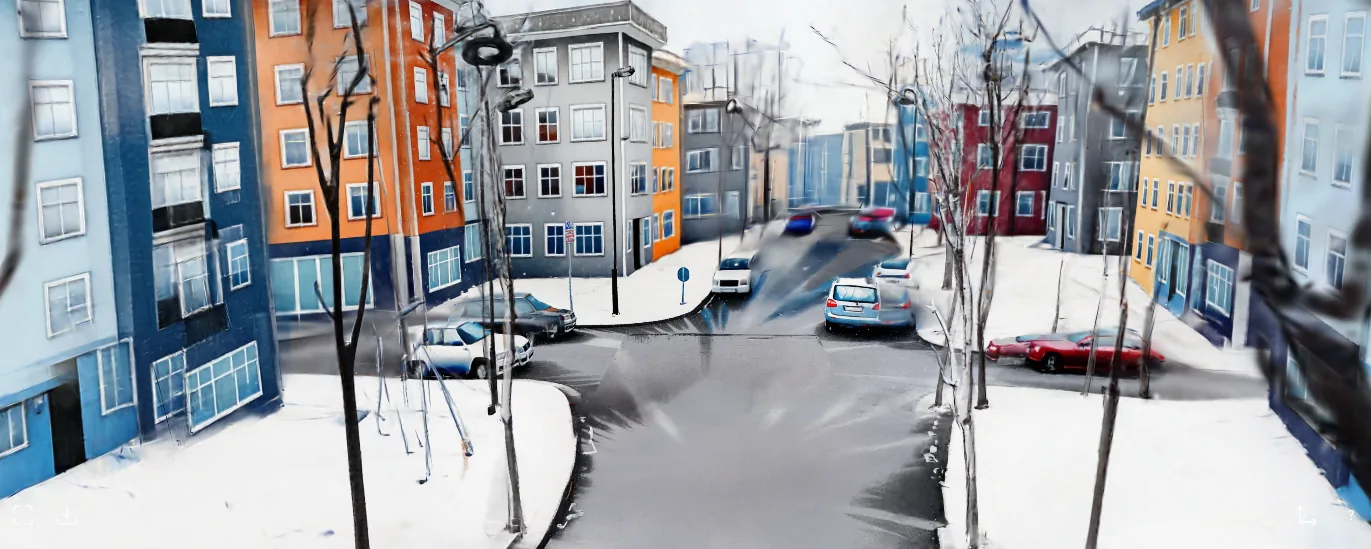
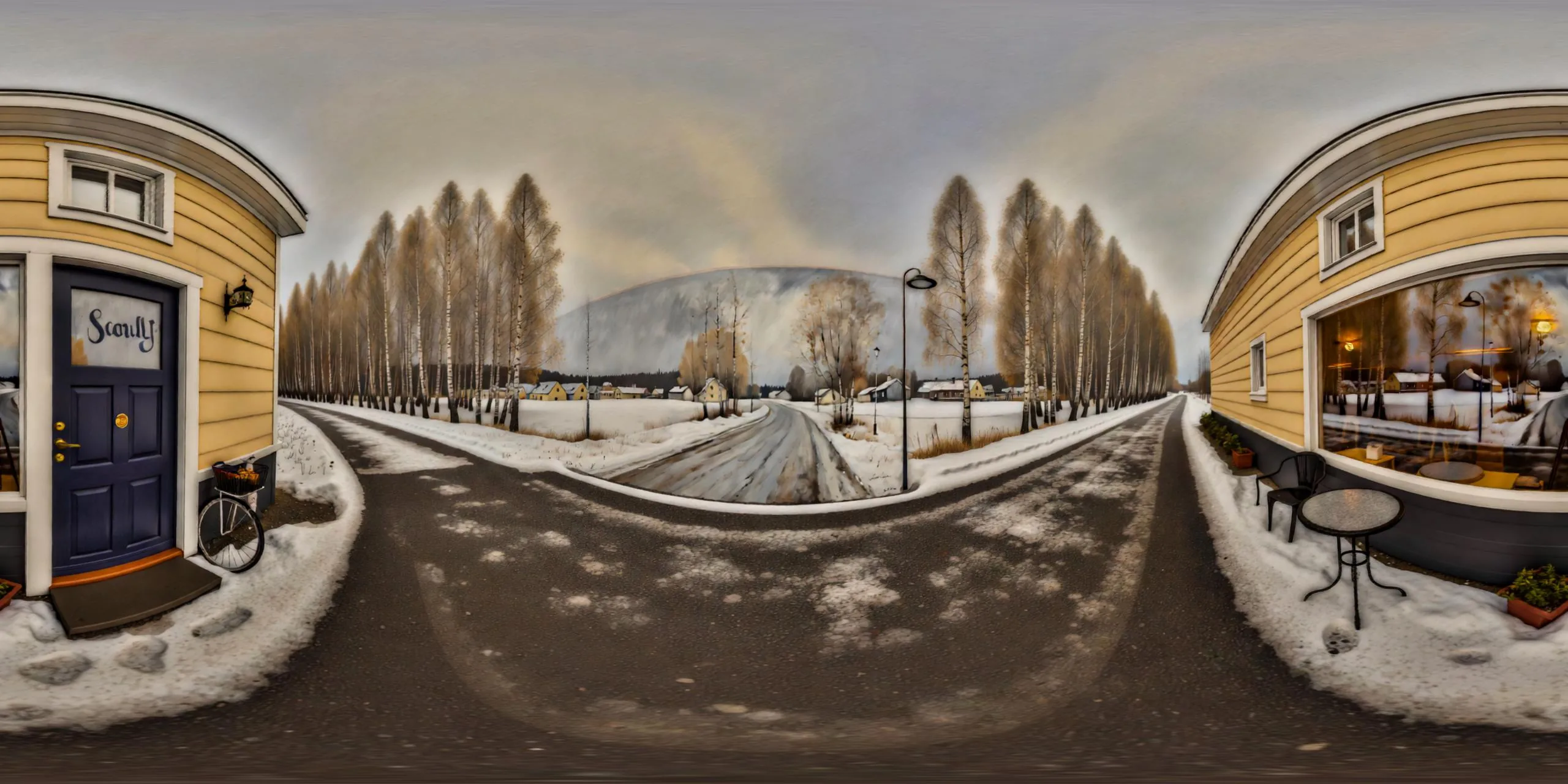 drag to look around
We license a working artist's paintings, train a small model on their style, and carry that visual language across a whole pipeline — without the painter ever leaving the studio.
Fine artists don't usually work in animation. The economics don't fit, the timelines don't fit, the medium doesn't fit. A painter who shows in galleries isn't going to spend six months drawing backgrounds for a series — and that's a big reason animation tends to look the way it looks. A licensed style model changes that math.
We license the digital rights to an artist's work and train a LoRA — a small model that teaches a large image model one specific style. It doesn't make paintings and it doesn't replace the artist. It's a filter: give it any image and it pulls the result toward the artist's visual language — the brushwork, the bleeding edges, the palette. The artist's hand stays on the originals. The model carries the language across everything else: hundreds of environment shots, in their signature, consistently.
Same hand, two worlds — one trained style, applied across completely different settings and lifted into 3D you can move a camera through.
drag to look around
Licensed, credited, paid. The artist becomes part of the art direction on every production, with payment and backend attached. We don't train on artists who didn't agree, and we don't build a service that lets anyone else do that either. AI is a production layer here — a way to give an artist's signature reach — not a replacement for the people who make things.